The architectural landscape of contemporary American higher education is defined by an unprecedented, structural paradox. While colleges and universities across the United States operate ostensibly as epicenters of intellectual discovery and holistic pedagogical advancement, they function increasingly as hyper-competitive sorting mechanisms. The standard for academic achievement has shifted from mastery of subject matter to the continuous, unyielding accumulation of flawless evaluative metrics. In an era where a singular marginal deviation in Grade Point Average (GPA) can disqualify an undergraduate from elite employment opportunities or top-tier graduate placement, the pursuit of academic perfection has ceased to be an aspirational ideal. Instead, it has become a necessary baseline for systemic survival.
This systemic shift is not merely psychological; it is driven by measurable economic and structural realities. The escalating cost of educational capital, coupled with a contracting elite labor market, has forced students into an adversarial posture regarding their coursework. Every syllabus is analyzed as a high-stakes risk-mitigation challenge, and every terminal milestone becomes a potential institutional bottleneck. As undergraduates navigate this demanding paradigm, the demand for specialized, reliable guidance has risen exponentially. Recognizing these profound structural stressors, sophisticated, comprehensive scaffolding architectures have emerged to help students optimize their technical output. For advanced scholars navigating these intense institutional criteria, securing professional, high-tier help with thesis production modules represents a critical strategy to secure optimal outcomes in their terminal degree frameworks.
To comprehend the multi-dimensional scope of this transformation, one must look closely at the underlying socio-demographic and structural dynamics. The pressures observed in current US higher education systems are not distributed uniformly; rather, they manifest as distinct operational hurdles across different phases of the collegiate journey, compounding from introductory underclassman modules through to advanced postgraduate research designs.
The Macro-Economic Pressures and Admissions Bottlenecks
The root causes of hyper-competition within the American university system can be traced to systemic supply-and-demand imbalances within elite tiers of higher education. Over the past three decades, applications to top-100 institutions ranked by U.S. News & World Report have increased by over 200%, while the total number of freshman seats has remained virtually unchanged. This institutional bottleneck has triggered an elite filtering effect that impacts the entire tertiary educational hierarchy. High school applicants are forced to present perfect standardized test scores, advanced placement distributions, and exhaustive extracurricular profiles just to gain entry to competitive public or private institutions.
Once admitted, the pressure does not subside; it intensifies. The modern cost of attendance serves as a powerful accelerator of academic anxiety. According to data tracking institutional pricing models, the inflation-adjusted cost of undergraduate tuition, room, and board in the United States has experienced a continuous upward trajectory, outpacing median household income growth by factor margins. When an individual credit hour represents thousands of dollars in debt or out-of-pocket expenditure, the financial penalty for an academic misstep is exceptionally high. Students can no longer afford to treat college as a space for open-ended experimentation. Instead, they must view their coursework through the lens of maximizing return on investment (ROI).
Consequently, the distribution of undergraduate majors has shifted significantly toward pre-professional tracks—such as Computer Science, Biomedical Engineering, Finance, and Data Analytics. These disciplines are characterized by highly objective, punitive grading curves, where the distance between an “A” and a “B” can depend on a fraction of a percentage point. This reality leaves students highly vulnerable to institutional burnout, as the margin for error approaches absolute zero.
How Master’s and Ph.D. Candidates Can Overcome the Thesis Bottleneck
While institutional hurdles remain a constant reality, advanced candidates can regain control of their academic trajectory by shifting from passive stress to structured, actionable survival blueprints. When learning how to manage time writing a master’s thesis, the key lies in micro-scheduling. Long-form manuscripts quickly become overwhelming when treated as unified deliverables; breaking the project down into isolated, predictable components—such as literature matrices, methodology definitions, and data chapters—enables steady progress without cognitive fatigue. Dedicating an uncompromised 90-minute block each morning specifically to draft generation prevents the common pitfall of letting weekly administrative tasks swallow research windows.
The operational complexity spikes significantly when a scholar faces the dual challenge of balancing full-time work and dissertation writing. Operating under this level of performance demand requires treating energy management with the same precision as time management. Navigating this lifestyle demands shifting away from traditional academic workflows toward high-efficiency frameworks, such as utilizing structured writing templates, verified reference outlines, and target benchmarks. Relying on professional editing pipelines and methodology validation networks keeps candidates from wasting dozens of hours in repetitive revisions forced by subjective faculty committees, ensuring that raw research insights pass strict institutional reviews without stalling progress.
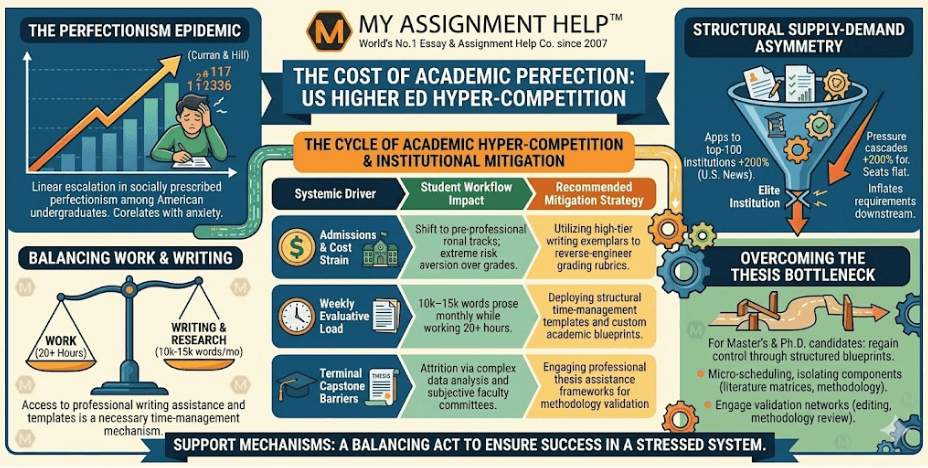
Figure 1: The Cycle of Academic Hyper-Competition & Institutional Mitigation
| Systemic Driver | Student Workflow Impact | Recommended Mitigation Strategy |
| Admissions & Cost Strain | Shift to pre-professional tracks; extreme risk aversion over grades. | Utilizing high-tier writing exemplars to reverse-engineer grading rubrics. |
| Weekly Evaluative Load | 10k–15k words of analyzed prose monthly while working 20+ hours. | Deploying structural time-management templates and custom academic blueprints. |
| Terminal Capstone Barriers | Attrition via complex data analysis and subjective faculty committees. | Engaging professional thesis assistance frameworks for methodology validation. |
Quantifying the Perfectionism Epidemic
The psychological consequences of this structural landscape are clearly documented in academic research. A landmark meta-analysis published by Curran & Hill tracked multi-generational data from American, British, and Canadian college students over a 27-year window. The study monitored three distinct dimensions of perfectionism: self-oriented perfectionism (holding oneself to unrealistic internal standards), socially prescribed perfectionism (the perception that the surrounding environment demands absolute perfection), and other-oriented perfectionism (holding peers to extreme expectations).
The findings were starkest for American cohorts, who exhibited the sharpest upward trajectory in socially prescribed perfectionism. This specific dimension correlates highly with severe clinical anxiety, depressive episodes, and acute academic paralysis. The modern US undergraduate internalizes a pervasive, societal message: your human value is completely tied to your transactional output and your institutional transcript. This phenomenon has completely altered how students engage with daily academic writing tasks. Rather than approaching essays as opportunities to synthesize new concepts, undergraduates often approach them with deep risk aversion, terrified that a unique perspective might diverge from a rigid grading rubric and result in a lower score.
This risk aversion has driven changes in study patterns, research methods, and the overall adoption of educational resources. To mitigate the danger of failing to meet complex rubrics, modern students require clear examples of high-level academic work. In this context, utilizing professional writing models—such as reviewing authentic, custom-drafted benchmarks—has become a standard method for quality control. Reviewing verified college papers USA parameters provides students with clear structural blueprints, allowing them to decipher complex academic expectations, optimize their writing style, and safeguard their academic standing under immense pressure.
The Microstructural Strain: Weekly Evaluative Loads
While terminal examinations and capstone projects represent distinct milestones, the day-to-day pressure of hyper-competition is felt in the constant stream of small, weekly assignments. The modern American credit hour system relies heavily on continuous assessment frameworks. A typical semester-long course involves multiple short essays, discussion board contributions, research briefs, and continuous problem sets. This constant evaluation leaves little room for reflection, creating an ongoing operational burden where a student’s focus is split across many competing priorities.
For instance, a student enrolled in a full course load of 15 to 18 credit hours is frequently expected to generate between 10,000 and 15,000 words of analyzed prose every month, across different academic disciplines. Each deliverable requires careful source citation, clear argumentative structure, and precise formatting matching APA, MLA, or Chicago style guides. Managing this continuous writing load becomes even more difficult when combined with the practical realities of modern student life.
Data from the National Center for Education Statistics (NCES) shows that a significant majority of undergraduate students in the United States balance their studies with employment. Many work more than 20 hours per week to cover cost-of-living expenses and reduce student loan dependence. For these student-workers, time is a finite resource under constant strain. The math of a 168-hour week reveals that after accounting for employment, classroom attendance, mandatory study hours, and basic sleep, there is a structural shortage of time. In this environment, access to professional writing assistance and clear structural templates is not about avoiding work; it is a necessary mechanism for effective time-management and resource allocation.
The Ultimate Bottleneck: Capstone and Thesis Barriers
The culmination of this hyper-competitive system occurs during the upper-division and postgraduate phases, where students must complete comprehensive research projects. Whether navigating an honors undergraduate capstone, a master’s thesis, or a doctoral dissertation, scholars encounter a massive increase in academic expectations. These long-form documents require deep theoretical knowledge, rigorous methodology, exhaustive literature reviews, and original empirical data analysis.
At this advanced level, the challenge extends beyond managing time; it requires mastering complex research methodologies and navigating academic committees. A terminal thesis requires a student to shift from a consumer of knowledge to a producer of original scholarly insight. This transition occurs under the supervision of a faculty committee whose expectations are often subjective and varied. The structural barriers at this stage are a major cause of extended time-to-degree metrics and high attrition rates in graduate programs across the country.
To manage these significant challenges, access to specialized research consulting has become an important factor in student retention and success. Utilizing targeted help with thesis frameworks allows advanced students to break down complex projects into manageable pieces. Professional support provides vital clarity on research design, statistical validation, and structural editing, helping students transform raw research findings into cohesive, publication-ready documents that meet strict academic standards.
Systemic Implications for Institutional Integrity
The broad adoption of external academic support frameworks raises important questions about the structural future of American higher education. When a system requires flawless performance while increasing financial and logistical challenges, the growth of a supportive educational ecosystem is a natural economic result. Institutional leaders often view external academic assistance with caution, yet these services fill an operational gap that universities themselves have created by increasing class sizes and reducing face-to-face advising hours.
Rather than viewing this trend as a threat to academic standards, forward-looking educators recognize it as a symptom of a highly stressed system. As long as American society uses GPA and institutional status as primary sorting metrics for economic opportunity, students will continue to seek out effective tools to optimize their performance. Academic support services provide an important balance, ensuring that students from varied socio-economic backgrounds can access the foundational resources and editing expertise needed to compete on an equal footing.
Final Verdict
The hyper-competitive paradigm shaping US higher education shows no signs of slowing down. As long as admissions selectiveness remains a primary measure of prestige and the economic penalties for academic underperformance remain severe, American students will continue to operate under high levels of stress. The pursuit of academic perfection has changed the college experience, replacing the joy of intellectual curiosity with a constant focus on risk management and metric optimization.
Addressing this challenge requires a broad reappraisal of how we measure learning and capability in the United States. Until universities, employers, and graduate institutions look beyond simple quantitative metrics, students must use every practical mitigation framework available to manage their heavy academic workloads. Relying on structural time-management platforms, validated writing exemplars, and specialized thesis consultation paths provides an essential counterbalance. These support mechanisms protect the operational stability and performance metrics of modern scholars, ensuring they successfully clear the intense systemic hurdles of the contemporary university structure.
See also: How Technology Is Revolutionizing Communication Systems
Frequently Asked Questions (FAQ)
Q1: What factors drive hyper-competition in US universities today?
A1: The primary drivers are deep structural supply-and-demand imbalances at elite institutions, escalating tuition costs that demand high academic ROI, and a highly competitive job market that relies heavily on strict GPA cutoffs to sort entry-level candidates.
Q2: How does socially prescribed perfectionism affect undergraduate student performance?
A2: Socially prescribed perfectionism makes students highly risk-averse. Undergraduates become hesitant to explore unique perspectives, focusing instead on strictly adhering to grading rubrics to protect their GPA, which can limit creative critical thinking.
Q3: Why do modern student-workers use professional writing examples?
A3: With a significant portion of US students working over 20 hours a week, time is a highly limited resource. Reviewing high-quality exemplars helps students understand complex structural rubrics quickly, optimizing their writing process and keeping workloads manageable.
Q4: In what ways can professional thesis consulting assist postgraduate researchers?
A4: Advanced consulting provides clear guidance on complex research methodologies, data analysis validation, and structural organization. This helps scholars break down long-form papers and navigate the rigorous expectations of faculty committees effectively.
About the Author
Dr. Elizabeth Vance is a Senior Content Strategist and Academic Research Analyst at MyAssignmentHelp. She holds a Ph.D. in Higher Education Policy from a leading US institution and has spent over a decade researching socio-economic trends, student resource allocation, and institutional frameworks across North America. Her analytical work focuses on developing structural solutions to support advanced scholars navigating high-stakes academic environments.
References & Empirical Sources
- Curran, T., & Hill, A. P. (2019). Perfectionism is increasing over time: A meta-analysis of birth cohorts from 1989 to 2016 and a test of social changes. Psychological Bulletin, 145(4), 410–429.
- National Center for Education Statistics (NCES). (2024). The Condition of Education: Undergraduate Employment Dynamics. U.S. Department of Education.
- U.S. News & World Report. (2025). Historical College Admissions Data and Selectivity Metrics Trends.
- Twenge, J. M., & Campbell, W. K. (2021). Declines in trust and increases in anxiety among American college students: A longitudinal examination of cohort effects. Journal of Adolescent Research, 36(3), 245–268.
